ISDN Shutdown Austria: What Businesses Need to Know Now
Andreas Braunizar
Business Development
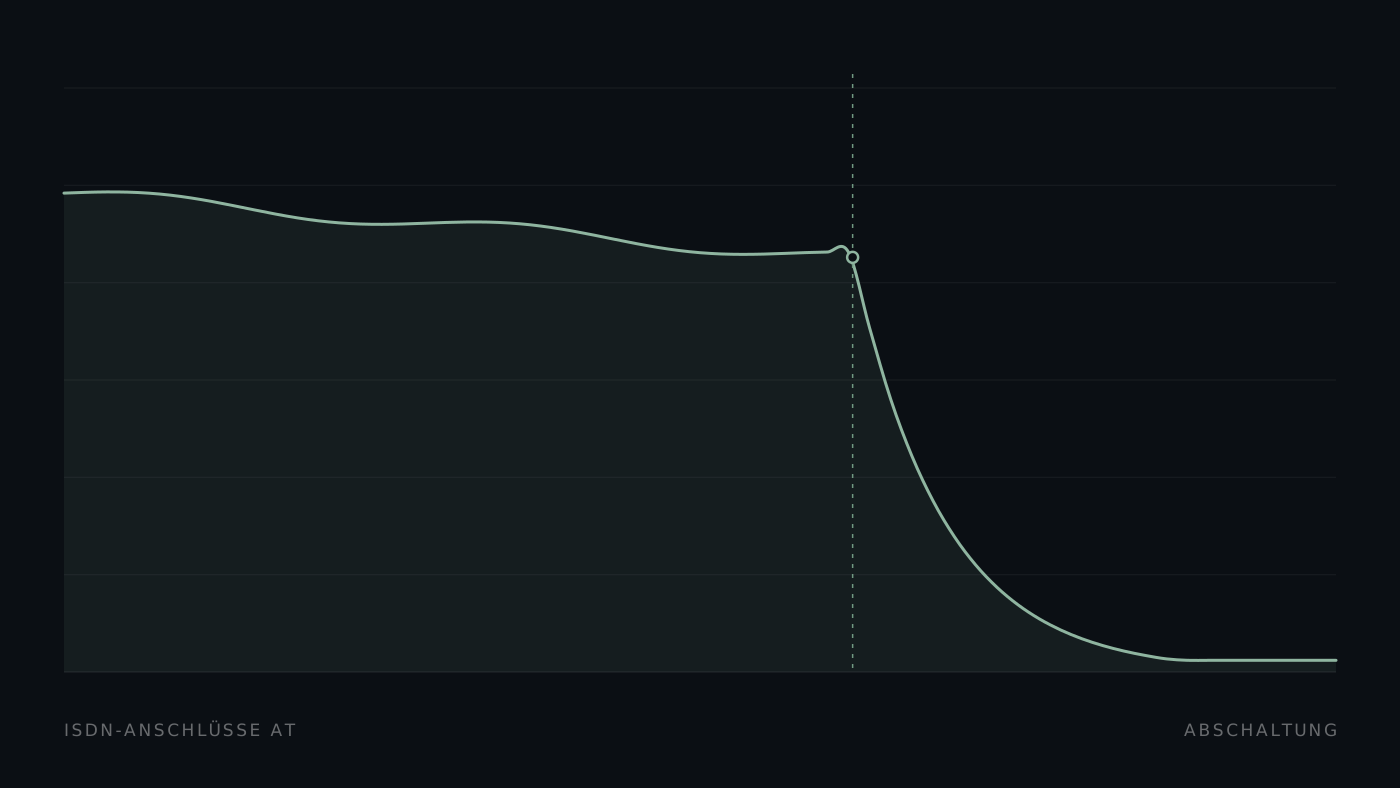
Summary: The ISDN shutdown in Austria is complete: A1 switched off ISDN basic connections on 31 December 2025 and ISDN multi-connections on 30 June 2026. All businesses using ISDN connections, fax machines, and traditional PBX systems are affected. Alternatives: SIP trunking (30-50% cheaper), hosted PBX (40-60% cheaper), or UCaaS like Microsoft Teams. A professional migration takes 2-4 weeks with no planned downtime.
Is ISDN really being shut down in Austria?
Yes. Austria's major network operators - A1, Magenta, and Drei - are fully migrating their networks to IP technology (All-IP). Germany already shut down ISDN between 2018 and 2020, and Austria is completing the switch now. The ISDN shutdown is not a question of if, but when.
Why is ISDN being shut down? ISDN is based on 1980s technology. Maintaining separate copper lines has become uneconomical for operators, while IP-based networks are more flexible, cheaper, and future-proof.
What is the ISDN shutdown timeline in Austria?
| Period | Milestone | Status | |
|---|---|---|---|
| until ~2020 | No new ISDN connections, new customers receive IP voice only | Completed | |
| 2024-2025 | A1, Magenta, and Drei actively migrate existing customers to All-IP | Ongoing | |
| End of 2025 | A1 shuts down ISDN multi-connections | Completed | |
| Mid-2026 | A1 shuts down ISDN basic connections | Ongoing |
Which businesses are affected?
All businesses still using:
- ISDN connections (BRI or PRI)
- Traditional PBX systems with ISDN connectivity
- Fax machines over ISDN lines
- Alarm systems and elevator emergency phones with ISDN dialers
- Card payment terminals with ISDN connections
Many Austrian businesses still rely on at least one ISDN service - often without realizing it, for example in alarm systems, elevator emergency phones, or card terminals.
What are the alternatives to ISDN?
| Alternative | What is it? | Cost vs. ISDN | Keep existing PBX? | Ideal for | |
|---|---|---|---|---|---|
| SIP Trunking | IP connection for existing PBX | 30-50% cheaper | Yes (SIP-capable or with gateway) | Businesses with working PBX | |
| Hosted PBX | Cloud phone system (no own server) | 40-60% cheaper | No (new IP phones) | SMEs without own IT department | |
| UCaaS (Teams, Webex) | All-in-one: phone + video + chat | 20-40% cheaper | No (software-based) | Companies with remote/hybrid work | |
| Mobile-only | Smartphones only, no landline | Variable | No | Micro-businesses (1-5 employees) |
What does ISDN migration cost?
| Company size | One-time costs | Monthly savings | ROI | |
|---|---|---|---|---|
| Small (5-15 employees) | €500-2,000 | €200-500 | 1-4 months | |
| Medium (15-50 employees) | €2,000-8,000 | €500-1,800 | 2-4 months | |
| Large (50-200 employees) | €5,000-20,000 | €1,500-5,000 | 2-4 months |
Based on Anexum's experience with 50+ migration projects, the investment pays for itself in an average of 3 months.
What happens if I do nothing?
- Cancellation by provider: A1 and Magenta are cancelling ISDN contracts with 3-6 months notice
- Rising costs: ISDN tariffs are increasing as legacy infrastructure maintenance costs more
- No new connections: New locations cannot get ISDN anymore
- Outage risk: No ISDN spare parts available for network failures
Frequently Asked Questions
Can I keep my existing phone numbers?
Yes. Number porting is legally guaranteed (TKG 2021). All existing numbers are transferred 1:1 to the new solution.
Will my fax still work after the ISDN shutdown?
Classic ISDN fax machines will stop working. Alternatives: Fax-over-IP (T.38), email-to-fax gateways, or cloud fax services from €5/month.
Do I need a new internet connection for VoIP?
VoIP requires approximately 100 kbit/s per concurrent call. Any modern broadband connection is sufficient. Recommendation: at least 50 Mbit/s symmetric.
What if my PBX doesn't support SIP?
A SIP gateway (€200-500) converts ISDN signals to SIP. This lets you continue using your existing system until end of life.
How long does the migration really take?
With professional planning: 2-4 weeks with no planned downtime. Self-managed: 2-3 months with increased outage risk.