Setting Up Microsoft Teams Telephony: Options, Costs, and Process
Andreas Braunizar
Business Development
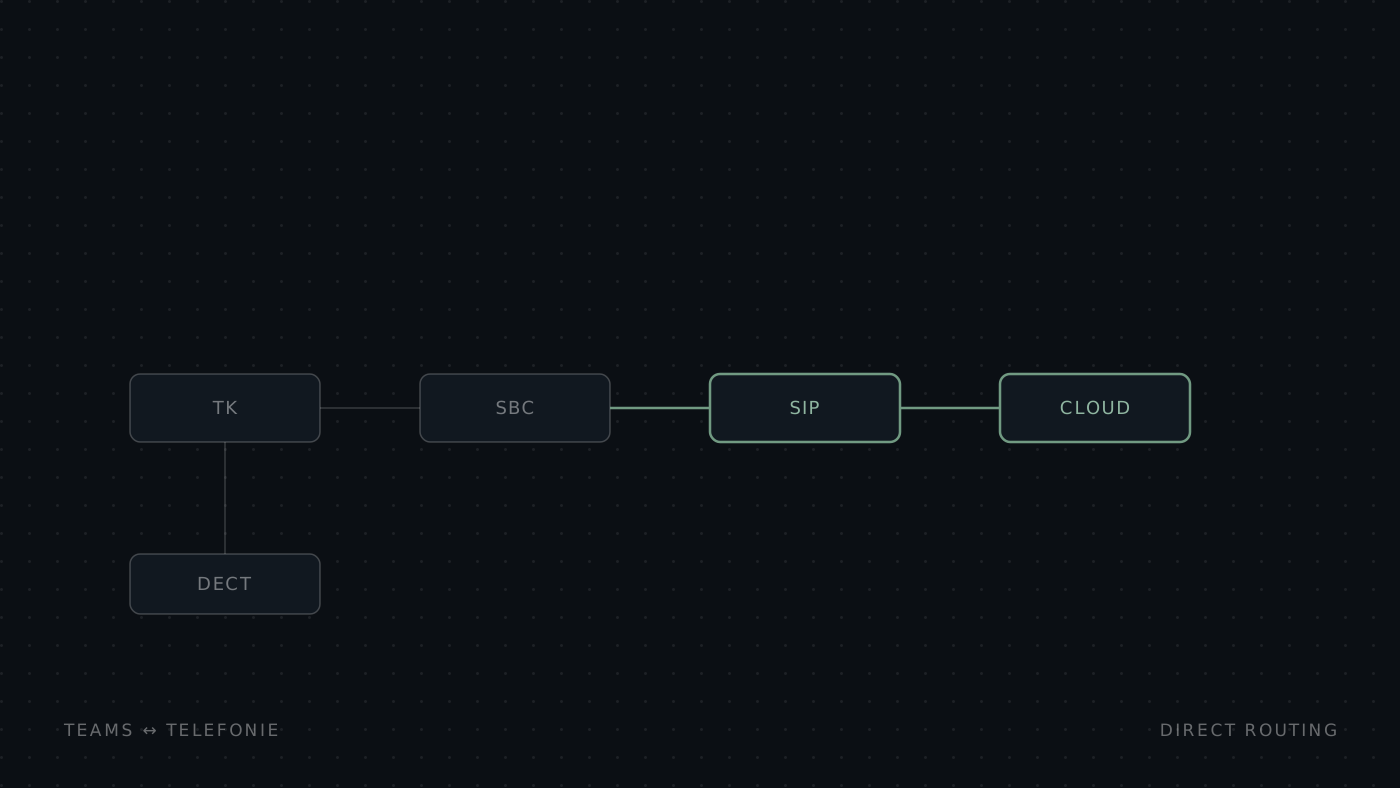
Summary: Microsoft Teams telephony turns Microsoft Teams into a full phone system, letting users make and receive calls on regular phone numbers directly in the app, on a desk phone, or on a smartphone. There are three connectivity paths, Calling Plan, Operator Connect, and Direct Routing, costing roughly €8-25 per user per month on top of the Teams Phone licence. For companies with existing SIP trunks or multiple sites, Direct Routing through an independent provider is usually the most economical and flexible option.
What Exactly Is Microsoft Teams Telephony?
Microsoft Teams telephony, also called Teams Calling or Teams Phone, extends Microsoft Teams with a genuine phone system function. Instead of a separate PBX, employees use Teams for internal chat, meetings, and external calls over the regular phone network, all in one interface, on any device.
For this to work, Teams needs a connection to the public telephone network. That connection is the part that raises the most questions during setup.
What Are the Three Ways to Connect Teams to the Phone Network?
Microsoft offers three connectivity options that differ significantly in cost, flexibility, and dependency:
| Option | How it works | Cost per user/month | Best suited for | |
|---|---|---|---|---|
| Microsoft Calling Plan | Microsoft itself is the carrier, numbers come from Microsoft | €12-25 plus licence | Small teams with no existing contracts | |
| Operator Connect | A certified partner carrier provides the connection, managed in the Teams Admin Center | €10-20 plus licence | Mid-sized companies with a preferred carrier | |
| Direct Routing | Your own SIP trunk via a Session Border Controller (SBC), free choice of provider | €8-18 plus licence, often cheaper with an existing trunk | Companies with existing SIP contracts, multiple sites, or special requirements |
In every case, you also need the Microsoft Teams Phone licence, currently around €8 per user per month, unless it is already included in an existing Microsoft 365 plan. As an example, a 10-user setup on Direct Routing comes to roughly €80 in Teams Phone licences plus €80-180 for connectivity, so €160-260 per month in total.
When Does Direct Routing Pay Off Over Calling Plan?
Calling Plan is the fastest to set up, since Microsoft delivers everything from one source. The downside: you are locked to Microsoft as the carrier, the choice of local area codes is limited, and existing SIP contracts cannot be reused.
Direct Routing pays off once one of these applies:
- You already have a SIP trunk contract with a carrier you want to keep using
- You operate multiple sites with different local phone numbers
- You need a connection to an existing call centre or IVR solution alongside Teams
- You want the flexibility to switch carriers if prices rise, without rebuilding your Teams configuration
How Does a Direct Routing Setup Actually Work?
- Assessment: Which numbers, sites, and existing contracts are in place?
- Provision the SBC: A Session Border Controller connects Teams to the SIP trunk of the chosen provider.
- Link numbers: Existing or new phone numbers are assigned to Teams users.
- Emergency call configuration: Location data is stored so emergency calls transmit the correct address.
- Pilot group: A small team tests call quality and caller ID before the rollout to all users.
- Rollout: The remaining users are licensed and connected, typically within one to two weeks after the pilot phase.
Case in Point: An Engineering Firm with Two Sites
An engineering firm with offices in Vienna and Graz already used Teams for meetings but still made calls through a separate PBX at each site. After switching to Direct Routing with a shared SIP trunk, both sites became reachable under the same internal short codes, the two old system contracts expired, and monthly telephony costs dropped by about 35%.
Why Anexum Defaults to Direct Routing Over Calling Plan
Anexum connects Teams telephony via Direct Routing by default, because it keeps the choice of carrier open. We handle the SBC provisioning, the migration of existing numbers from an old ISDN or SIP system, and stay a single point of contact for both Teams configuration and network connectivity. That saves you from coordinating two contracts and two support hotlines whenever voice quality is off.
Conclusion
Teams telephony fully replaces a separate phone system once the connection to the phone network is in place. For most companies with more than a handful of users or existing contracts, Direct Routing is the more economical and flexible choice over Microsoft's own Calling Plan. Whether Teams is the right path at all, or a standalone cloud PBX fits better, is covered in Cloud PBX: benefits, costs, and comparison. Details on setup and ongoing support are on Enterprise Voice at Anexum.
Frequently Asked Questions
Do I still need a classic phone system alongside Teams?
No. With one of the three connectivity options, Teams takes over the full phone system function, including queues, call forwarding, and caller ID.
What does Teams telephony cost per user in total?
Budget for the Teams Phone licence at around €8 plus €8-25 for the connection to the phone network, depending on the option chosen. With an existing SIP trunk via Direct Routing, the connection cost is often at the lower end of that range.
What is the difference between Calling Plan, Operator Connect, and Direct Routing?
With Calling Plan, Microsoft itself is the carrier. Operator Connect links a certified partner carrier directly in the Teams Admin Center. Direct Routing connects Teams through a Session Border Controller to a freely chosen SIP trunk provider.
Can I use my existing phone numbers in Teams?
Yes. All three options let you port existing numbers, or, with Direct Routing, keep using them directly through your existing SIP trunk.
How long does it take to set up Teams telephony?
A pilot group is usually set up within a few days. The full rollout to all users takes one to two weeks depending on company size.